Poor website performance costs businesses 15% in revenue
Every second counts when it comes to keeping a website running smoothly. Slow load times or unexpected downtime frustrate visitors when they are ready and willing to make a purchase. This can lead to lost revenue, missed opportunities, and falling behind the competition.
We surveyed 206 business owners across industries, such as ecommerce, marketing, advertising, copywriting, clothing, and consulting, with an average annual revenue of $119,000 to find out how website performance affects their company’s bottom line and what they’re doing to improve it before the busy holiday season. The results may surprise you.
Key points
- Over 1 in 10 business owners (13%) experienced website downtime in the last year.
- Poor website performance costs business owners 7.5% in traffic loss, and 1 in 10 faces bounce rates over 50%.
- 12% of business owners report losing revenue every month due to poor website performance, incurring an average revenue loss of $20,172 (or 15%) annually.
- If their website performs poorly on Black Friday, business owners estimate losing $1,160 (a 10% revenue loss).
- 28% of business owners plan to invest an average of $1,132 to improve their business website for the upcoming holiday season.
Poor website performance costs more than time
A website that loads slowly or experiences downtime is an inconvenience that can cause significant setbacks for businesses, resulting in more time and money being spent on issues that could have been prevented.
Due to poor website performance:
- 67% lost revenue.
- 55% missed key growth opportunities.
- 41% suffered damage to their brand’s reputation.
- 33% received an increase in customer complaints.
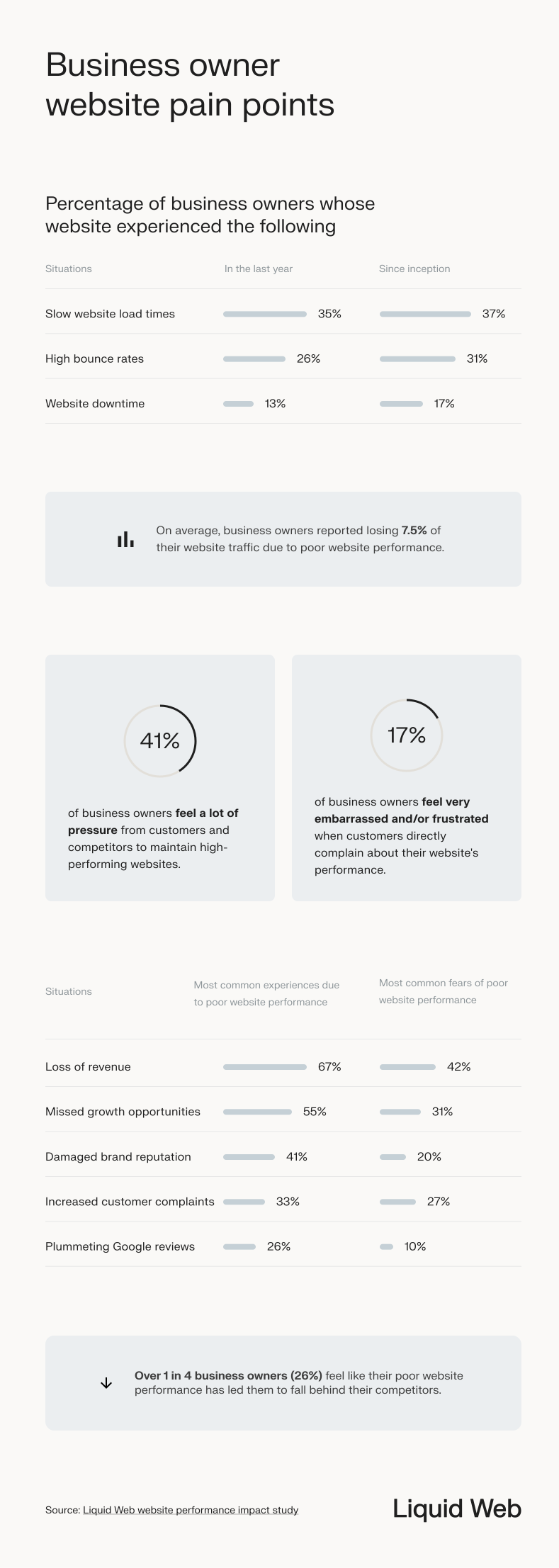
In the past year, over a third of businesses (35%) reported slow website load times, while more than 1 in 10 (12%) experienced website downtime.
These disruptions don’t just affect user experience – on average, respondents estimated they lost 7.5% of their web traffic due to sluggish website speed or downtime.
The financial toll was even more severe:
About 2 in 3 business owners reported that poor website performance led to lost revenue, impacting both their customer retention strategy and their ability to improve conversion rates.
Beyond profitability, some business leaders also frequently worried that poor website performance could damage their brand’s reputation (31%) or lead to missed business opportunities (20%).
Falling behind competitors was another major concern:
Over 1 in 4 business owners felt that poor performance caused them to lag behind rivals with more reliable websites.
Site speed optimization and high-performance web hosting can make a significant difference for those aiming to safeguard revenue and maintain customer trust. These strategies help ensure smooth operations even during peak traffic times and reduce the risk of ecommerce cart abandonment.
How bounce rates cut into profits
High bounce rates signal lost sale opportunities and can directly affect a business’s bottom line, especially during major shopping events.
Estimated total daily revenue loss due to poor website performance on:
$1,160
Black Friday
$982
Cyber Monday
$894
New product launch day
Here’s how the percentages break down:
- Black Friday: 10% of businesses
- Cyber Monday: 9% of businesses
- New product launch day: 8% businesses
While these numbers may seem conservative, they’re based on the average annual revenue of smaller businesses in our study. For companies that heavily rely on seasonal sales or new product releases, the impact of performance issues on high-traffic days is likely much higher.
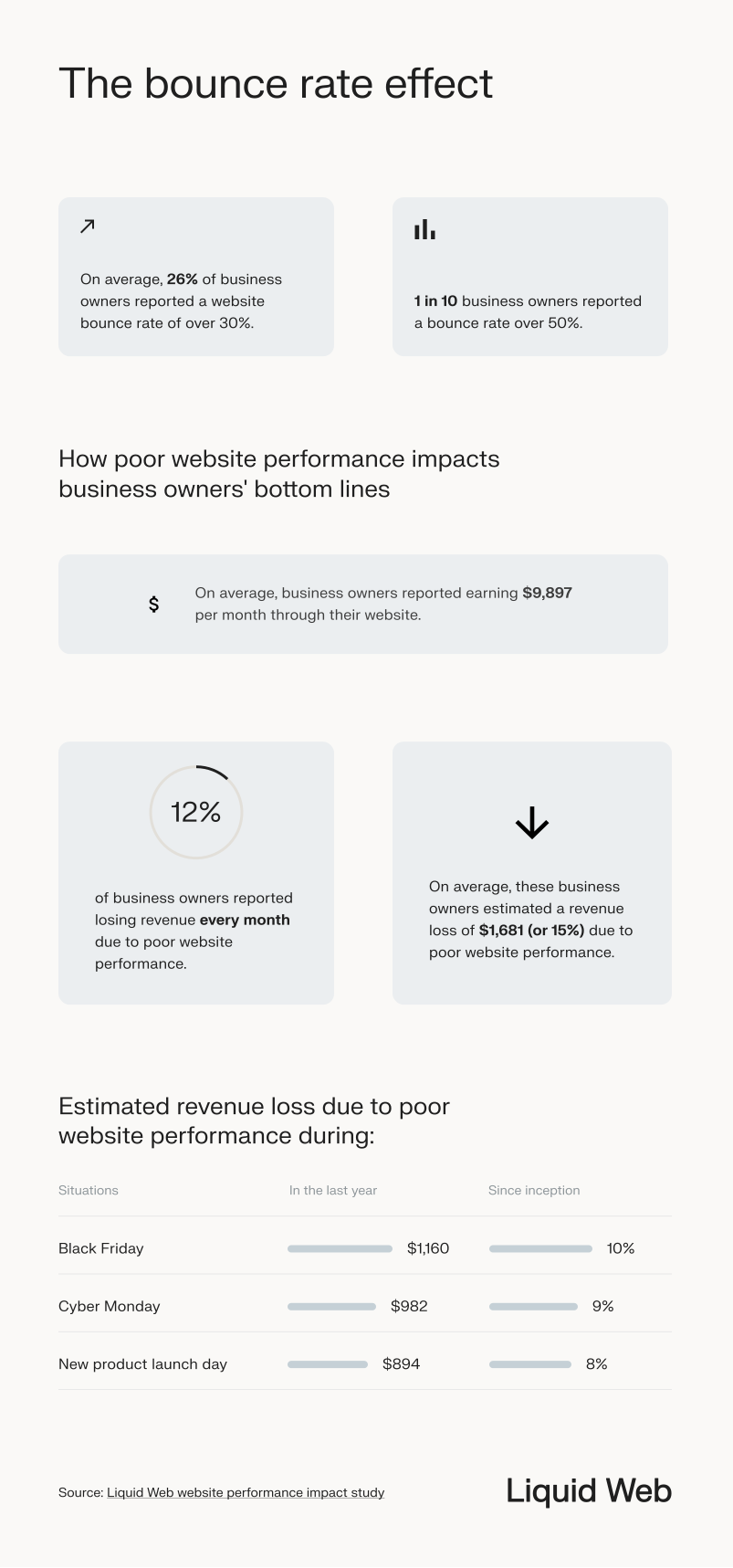
On average, 26% of business owners experience bounce rates exceeding 30%, with 10% facing bounce rates over 50%. This level of customer drop-off makes it clear how performance issues can drive potential customers away before they even explore the site.
- Over 1 in 10 business owners (12%) said they lose revenue every month due to poor website performance and estimated it amounts to $20,172 per year on average – or 15% of their total annual revenue.
- Among ecommerce businesses, 13% reported monthly revenue losses, equating to an 11% annual shortfall on average.
For businesses without current website performance issues, the risk is still top of mind. These respondents projected they would face a 28% (or $2,771) monthly revenue loss if their websites experienced slowdowns or downtime in the future.
Protect your revenue with lightning-fast WordPress
Explore Liquid Web’s range of WordPress hosting options with 99.999% uptime.
Events like Black Friday, which depend heavily on site performance, carry even more pressure, as Black Friday and Cyber Monday can contribute to 30% of annual sales volume on average.
- If performance issues arose on Black Friday, business owners estimated they would lose $1,160 on that day — a 10% loss of revenue.
Even a seemingly minor slowdown on Black Friday or Cyber Monday could have an outsized impact on larger businesses, especially those with high seasonal revenue. With proactive investments in high-performance hosting and site optimization, businesses can mitigate these risks and position themselves for long-term growth.
Power up sales with high-performance hosting
The right hosting solution can mean the difference between missed sales and sustainable growth. To improve their websites, business owners have most often:
- Optimized images and code: 38%
- Reduced third-party scripts or plugins: 32%
- Switched to a high-performance hosting provider: 27%
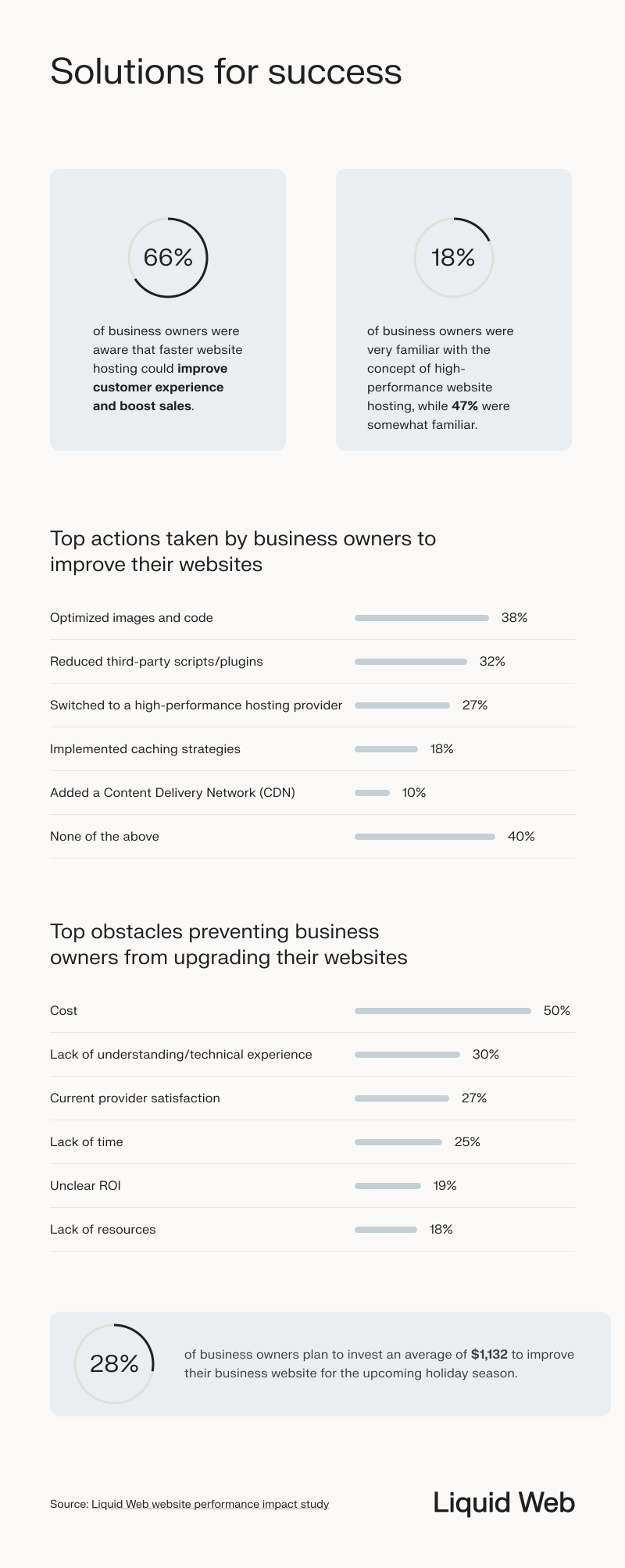
A majority of business owners (66%) understand that faster hosting improves customer experience and boosts sales. However, only 27% have switched to high-performance hosting, and 40% have taken no action to improve their websites.
- Half identified cost as the biggest barrier, while 30% said their lack of understanding or technical experience has prevented them from upgrading their business website.
Despite challenges, 28% of business owners plan to invest an average of $1,132 in website improvements to prepare for the holiday season and ensure smooth operations.
“When pages take too long to load, customers leave–sometimes for good–resulting in lost sales and damaged trust.”
Tiffany Bridge
Ecommerce Product Manager for Liquid Web

“Many business owners don’t realize how much slow performance impacts customer experience,” explained Tiffany Bridge, Product Manager, Ecommerce Applications/Security/Professional Services at Liquid Web.
“When pages take too long to load, customers leave – sometimes for good – resulting in lost sales and damaged trust. Faster hosting provides a rock-solid foundation for better website performance, especially on a platform that includes site speed features automatically.”
“High-performance hosting is also about preparing your site for growth and handling sudden traffic surges,” Ryan MacDonald, Chief Technology Officer at Liquid Web, added.
“With the right scalable solutions, businesses can handle busy periods like the holidays without overextending their budget.”
Ryan MacDonald
Chief Technology Officer for Liquid Web

“With the right scalable solutions, businesses can handle busy periods like the holidays without overextending their budget while also laying the foundation for long-term success. Managed hosting is an ideal option for those without the technical resources or expertise to make their website as reliable as possible.”
Turning performance challenges into opportunities
Whether faced with downtime and slow site speed, website performance issues are a reality for almost all online businesses. But they don’t have to hold you back.
As more business owners explore high-performance hosting solutions, those who invest wisely position themselves to retain customers, protect revenue, and stay ahead of the competition – especially during high-stakes seasons like the holidays.
A thoughtful upgrade today could mean fewer headaches and more opportunities tomorrow.
Five insights to leverage for a strategic advantage:
- Invest in high-performance hosting.
Think of hosting as growth fuel, not just an expense. Strong hosting protects revenue and customer loyalty. - Optimize proactively, not reactively.
Regularly tune site speed—minify code, optimize images, and reduce scripts to avoid recurring revenue losses. - Evaluate missed growth opportunities.
Downtime limits growth. Calculate its long-term impact on customer lifetime value and competitive edge. - Plan for scalability on high-traffic days.
Scale resources for peak events like Black Friday to avoid major sales losses and provide seamless customer experiences. - Educate teams on downtime’s business impact.
Show all teams how downtime affects trust, revenue, and growth to create a unified, performance-focused approach.
Maximize profits with site speed gains
Remember, every second counts! Liquid Web’s every second counts study shows that a 1-second site speed boost can increase conversions by 27%. By enhancing site performance, you can capture more customers, increase conversion rates, and maximize profits.
Turn these insights into action to stay ahead in a competitive digital landscape.
Fair use statement
Feel free to share this content about website speed and consumer behaviors for noncommercial purposes, but please credit this page with a dofollow link as the original source.
Share this content
<a href="https://www.liquidweb.com/white-papers/impact-of-downtime-on-businesses/" rel="dofollow">Discover the impact of downtime on businesses</a>
Learn more
WordPress speed made simple
Maximize performance WordPress hosting from Liquid Web.
